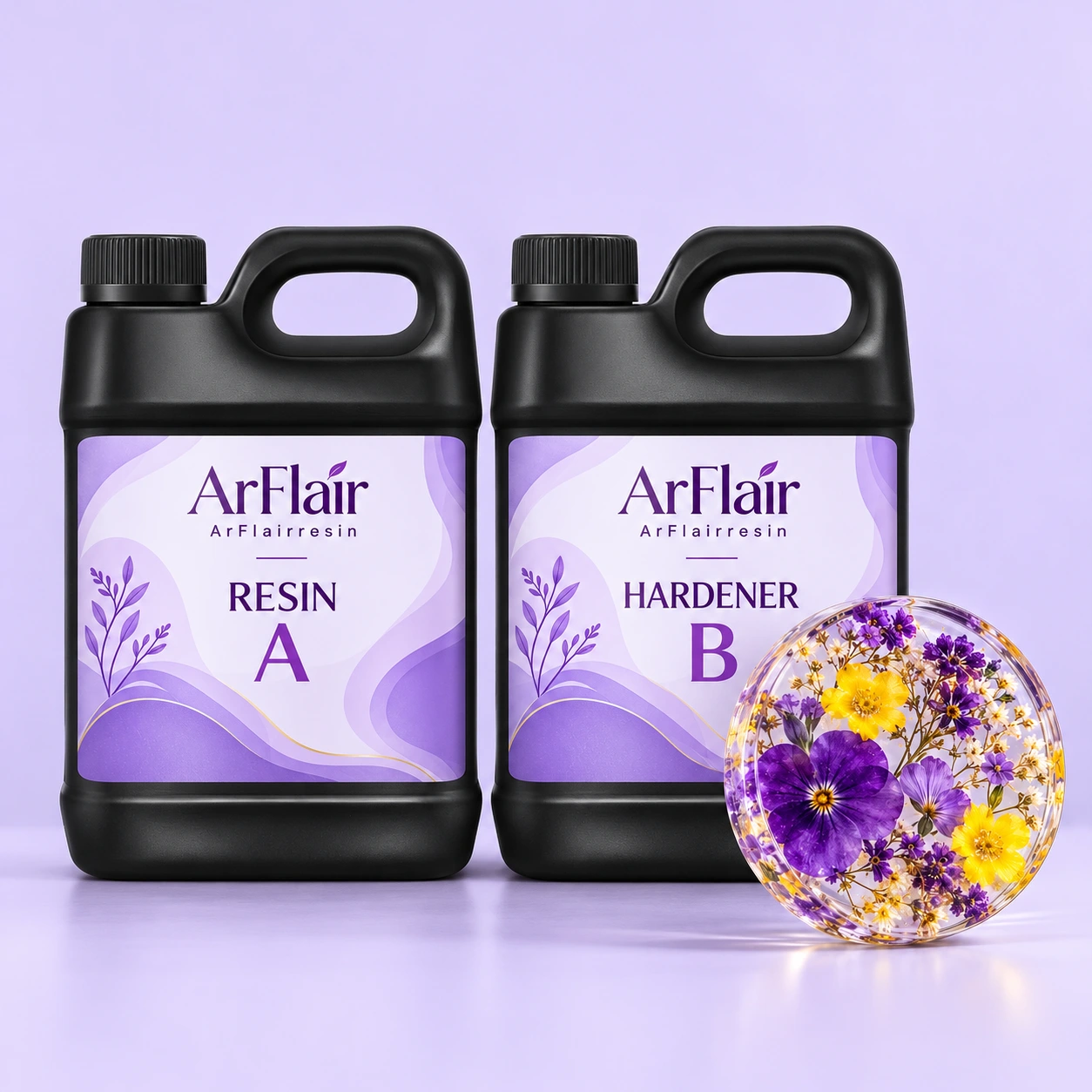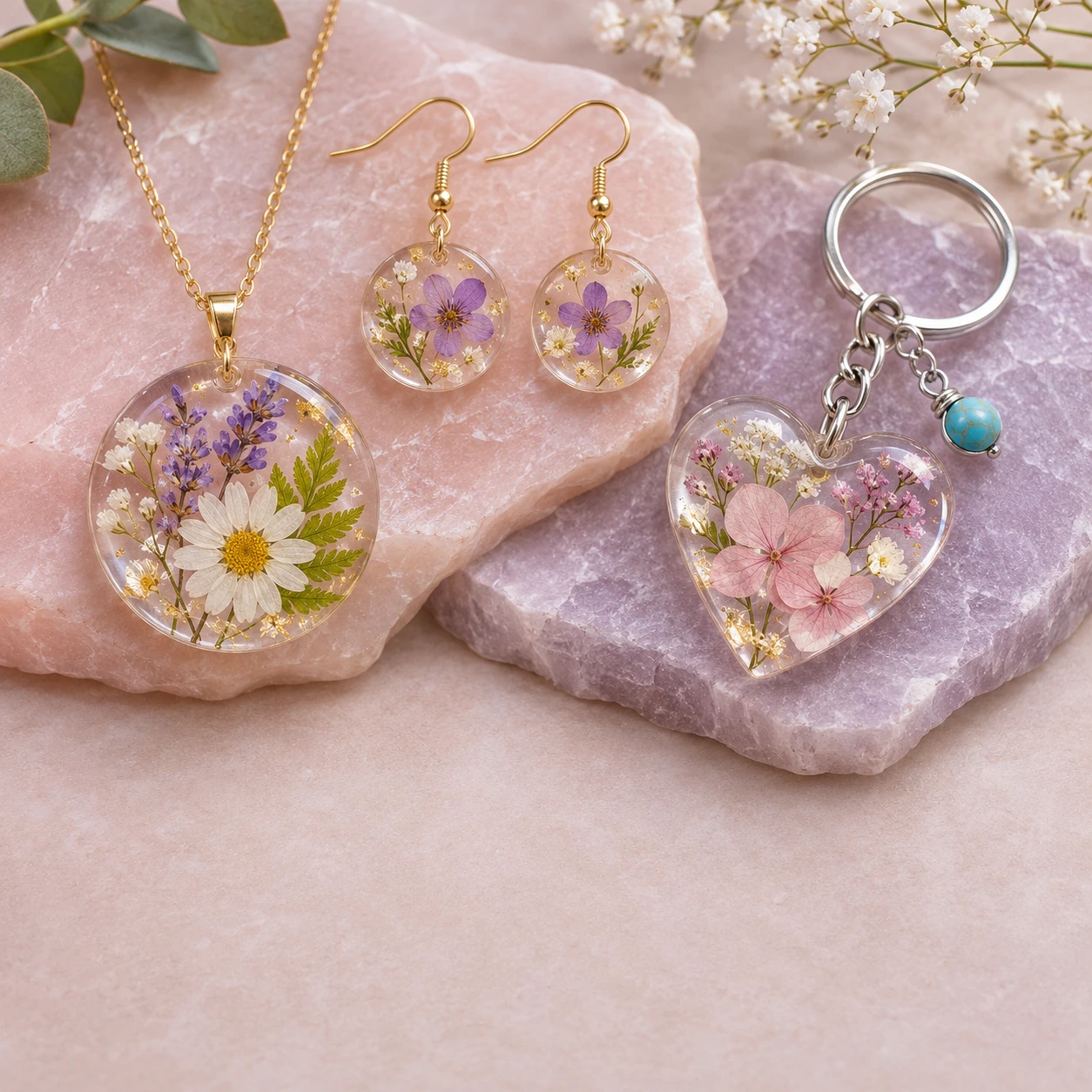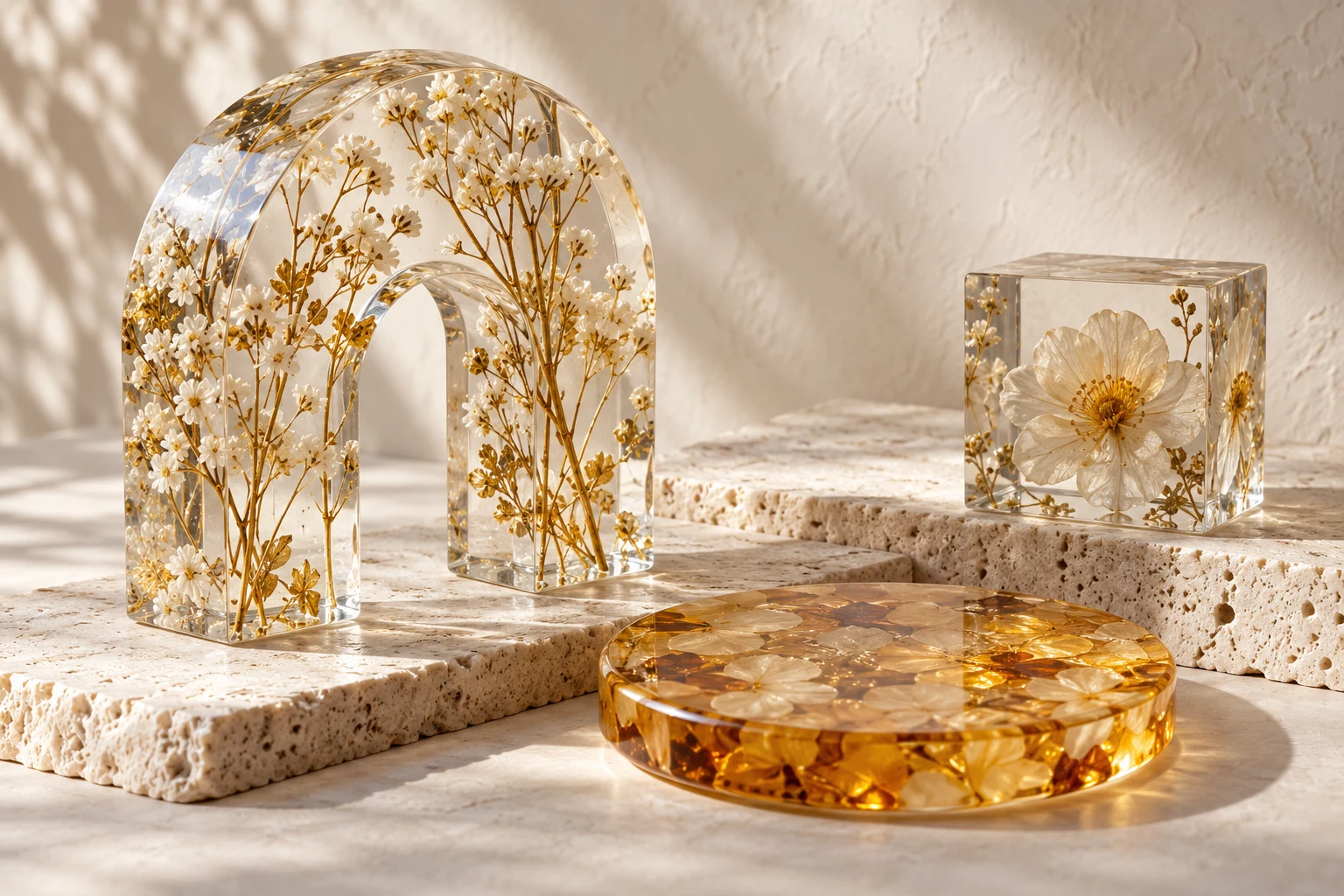
Before you begin
- Fully dried botanical materials
- A resin appropriate for the planned casting depth
- A clean compatible casting form
- Fine placement tools and suitable protective equipment
Start with dry, stable inclusions
Moisture in flowers can affect the result, and different petals react differently to resin. Select completely dried material and test a spare piece. If a sealer is considered, confirm that the resin supplier accepts it and test the complete combination.
Design the arrangement outside the form
Lay out the flowers on paper first. Leave enough clear space around the stems and petals so the composition remains readable from more than one angle. Check the finished depth against the resin’s permitted casting conditions.
Use the supplier’s layering method
Where layers are needed, follow the specified layer thickness and recoat timing. Place delicate flowers carefully without forcing them into a thickening batch. Avoid assuming that one resin’s layering schedule applies to another.
Evaluate the whole sample
After the required cure, inspect petal color, trapped air, clarity and the surface. Keep a record of the flower preparation and resin used. For keepsakes, make the test with expendable flowers before working with irreplaceable material.
TAKE THIS WITH YOU
A compatibility sample protects both your design and the botanical material.
For material processing, use the current TDS and SDS for the exact product you select. Mixing ratios, cure conditions and suitable applications vary by formulation.
CHOOSE MATERIALS FOR THIS PROJECT