Technical Spec Comparison: Epoxy Resin vs. UV Resin
| Feature / Parameter | 2-Part Epoxy Resin (1:1 / 2:1 / 3:1) | 1-Part UV Resin (365-405nm) |
|---|---|---|
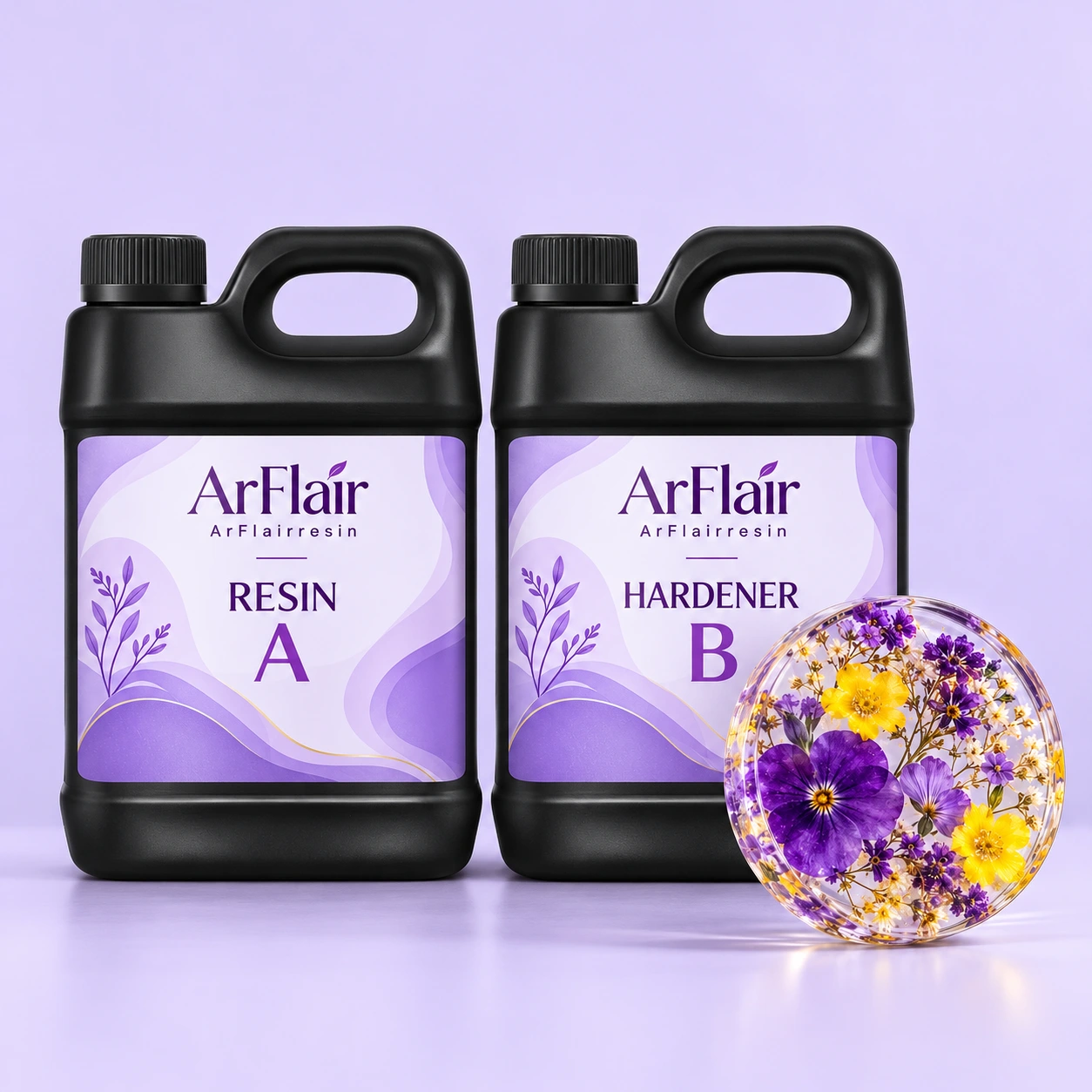
| Curing Mechanism | Chemical reaction between Part A (Resin) & Part B (Hardener) | Photopolymerization activated by 36W+ UV light or sunlight |
| Curing Time | 8 - 24 hours (Surface cure: 4-8 hrs; Full cure: 24-72 hrs) | 60 - 180 seconds under 36W UV lamp |
| Max Recommended Pour Depth | Coating: 1/4" (6mm); Deep Pour: 2" - 4" (50 - 100mm) | 1 - 3 mm per layer (Thicker casts need layered curing) |
| Shore D Hardness | 80 - 85 Shore D (Rigid, high scratch resistance) | 82 - 88 Shore D (Crystal glassy finish) |
| Yellowing Resistance (UV Blockers) | HALS + Advanced UV stabilizers (Indoor/Outdoor durable) | High optical clarity, zero optical distortion |
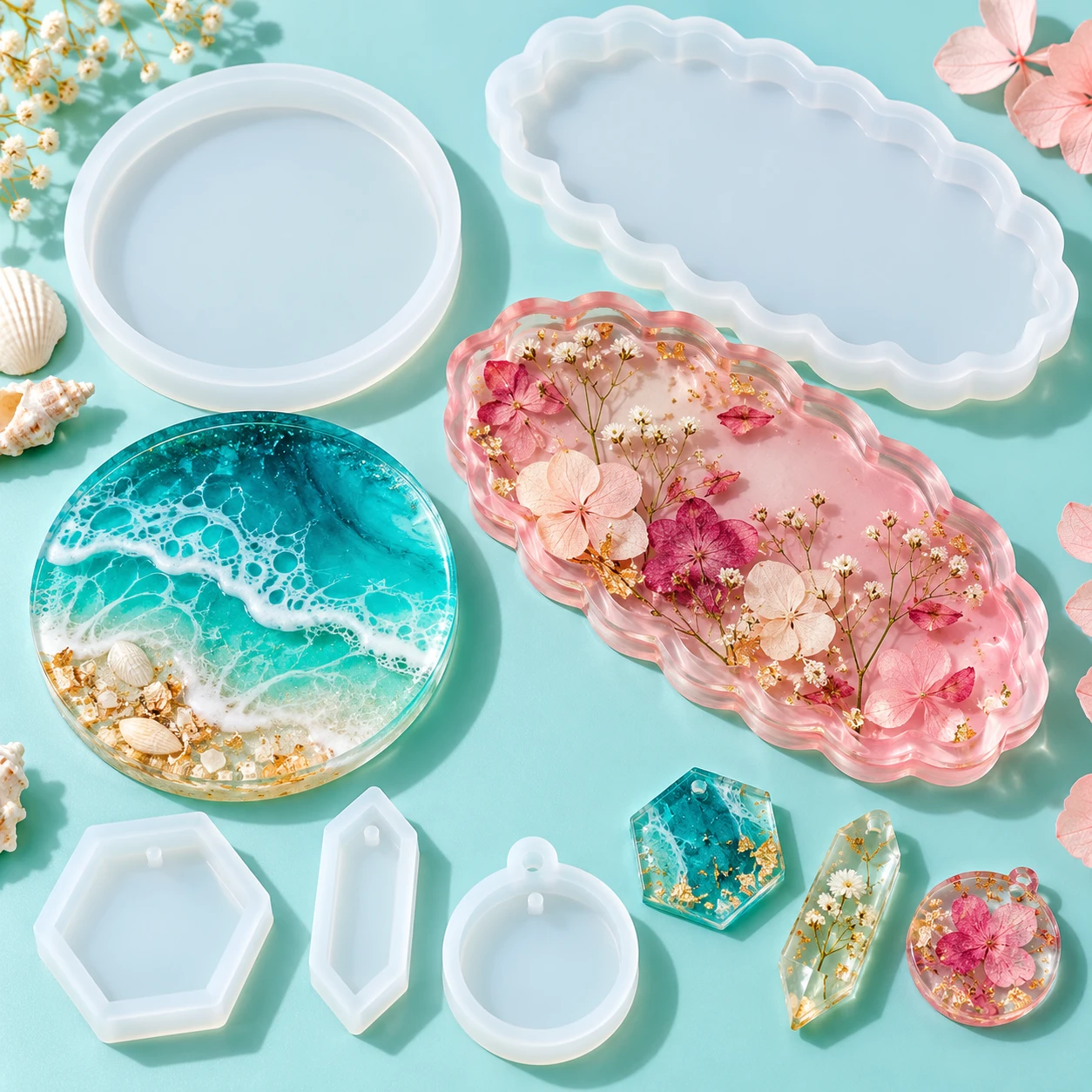
| Best Commercial Applications | River tables, countertop coating, art panels, large casting trays | Jewelry, bezel charms, nail art, rapid prototyping, small molds |
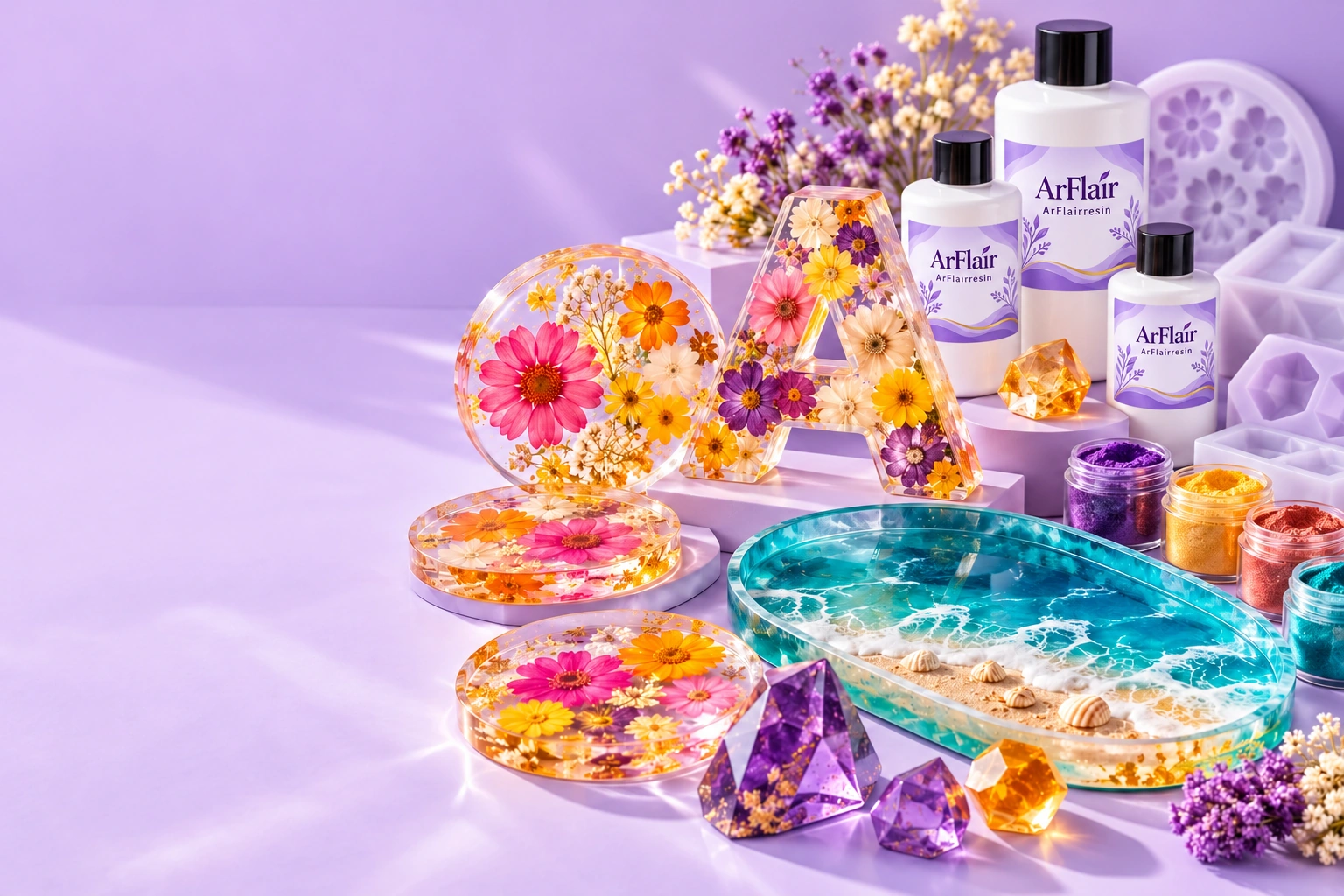
| Featured ArFlair Products | 1 gal Art Coating Epoxy Kit → 3 gal Deep Pour Kit → |
500 g UV Resin Bottle → 1,000 g Workshop UV Resin → |
Before you begin
- Your project dimensions and intended use
- The candidate products’ current technical data sheets
- A list of inclusions and colorants
- A small sample plan
Define the shape and scale
Measure the casting or coating and note the deepest section. Epoxy products vary in permitted batch size and casting depth. UV products depend on light reaching the material. A large opaque casting and a thin transparent charm need different approaches.
Consider the working process
A two-part epoxy requires accurate proportioning and mixing. UV resin needs an appropriate light source and a process that fits its documented layer limits. Compare how much time your arrangement requires before the cure begins.
Check the full material system
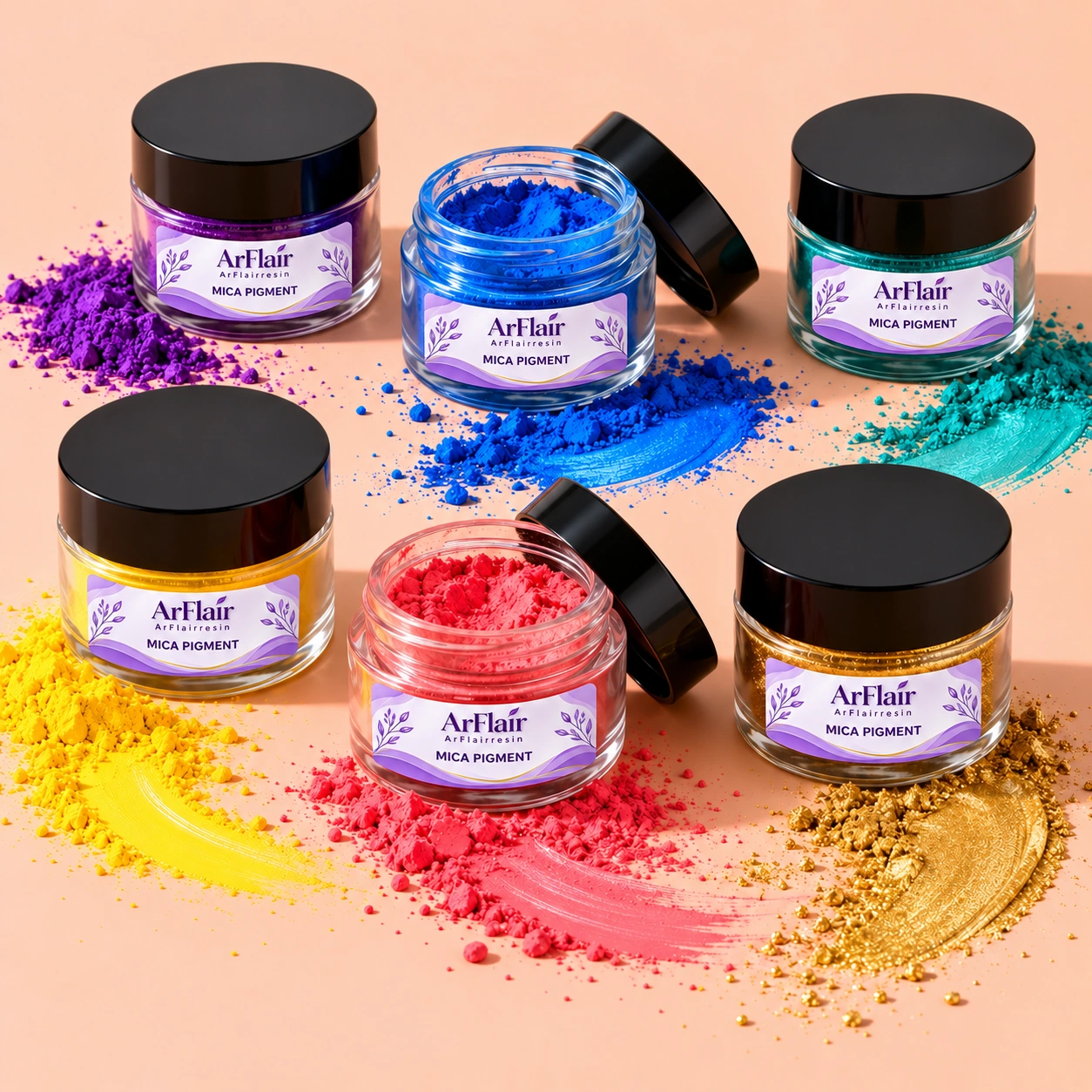
Include dyes, pigments, dried flowers, findings and the casting form in the review. Compatibility is about the whole combination. Ask for the correct TDS and SDS, then test the actual design under the recommended conditions.
Write a useful supplier brief
Share the dimensions, quantity, desired appearance, working environment and end use. Include photographs or a simple sketch. Request a sample recommendation rather than choosing from a product name alone.
TAKE THIS WITH YOU
Select a formulation for a defined job, then validate it with a sample.
For material processing, use the current TDS and SDS for the exact product you select. Mixing ratios, cure conditions and suitable applications vary by formulation.