
Before you begin
- Casting material suited to the shape and intended decorative use
- Clean, compatible coaster or tray molds
- Compatible pigments and fully dried decorative inclusions
- Measuring tools and the protection specified by the material supplier
Define the finished piece
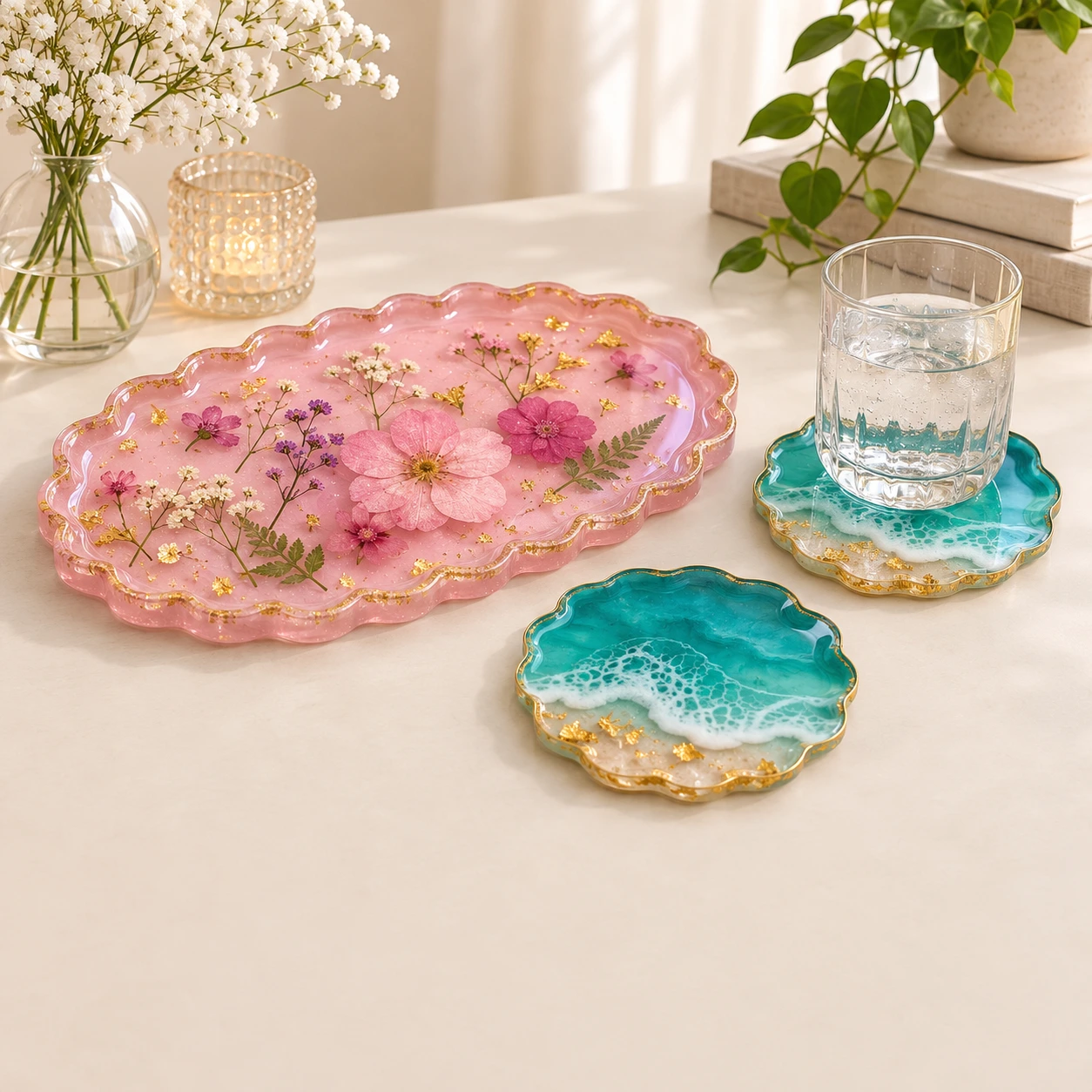
Decide whether you are making a transparent floral tray, an ocean-effect coaster or an opaque cast accessory. Record the dimensions, edge shape and desired finish. Select resin or casting powder for that specific result rather than treating the materials as interchangeable.
Keep the collection visually connected
Use a small palette and repeat one feature across the tray and coasters, such as a flower type, a rim color or a wave detail. Check that the mold dimensions and thickness leave room for the design. Test inclusions and colorants with your chosen formulation.
Cast a small sample first
Prepare, measure, mix and cure according to the exact product instructions. Follow the stated limits for casting depth, pigment loading and batch size. For powder casting, follow its own powder-to-water ratio and drying guidance. Inspect the fully cured or dried sample for bubbles, edges and surface quality.
Review use, care and packaging
Check the finished item against its intended use. Do not assume a resin piece is suitable for food contact, hot cookware or dishwashers; confirm documented suitability before making such claims. Consider protective feet, care instructions and packaging that keeps the surface from rubbing during shipping.
TAKE THIS WITH YOU
A coordinated collection starts with a repeatable sample and clear expectations for how the finished pieces will be used.
Use the current TDS and SDS for the exact material you select. Processing requirements and suitable applications vary by formulation.
CHOOSE MATERIALS FOR THIS PROJECT